Understanding Your Factory-Built Options in California
California has some of the highest housing costs in the country. Many residents are looking at factory-built options to find a path to homeownership or add space to an existing property. You might hear people use the words manufactured, modular, and park model interchangeably. They are not the same thing. Each category follows different building codes, qualifies for different types of financing, and has different rules for where you can place them.
Misunderstanding these categories can lead to expensive mistakes. A home that looks perfect on a website might not be legal to place on your specific lot. Financing a park model is entirely different from financing a modular home. To make the best choice, you need to know how the state of California and federal regulators define these structures.
The HUD Standard: Manufactured Homes
Manufactured homes are built entirely in a factory environment. They are constructed on a permanent steel chassis that stays with the home for its entire life. These homes must follow the Federal Manufactured Home Construction and Safety Standards, often called the HUD Code. This code was established in 1976 to ensure safety, durability, and fire resistance.
In California, these homes are a popular choice for land-lease communities and private lots. Because they are built to a federal standard, they do not have to follow local building codes for the structure itself. Local authorities still control where they can be placed and how the utility hookups are handled. These homes are generally the most affordable option per square foot. You can find them in single, double, or even triple-wide configurations.
Financing for manufactured homes is often handled through chattel loans if the home is in a park. If the home is placed on a permanent foundation on land you own, you may qualify for traditional mortgages like FHA or VA loans. Resale value for manufactured homes has improved significantly as build quality has risen over the last decade.
The State Level Standard: Modular Homes
Modular homes are often confused with manufactured homes because they both arrive on a truck. That is where the similarities end. Modular homes do not follow the HUD code. Instead, they are built to the California Building Code, which is the same set of standards used for traditional site-built houses.
These homes are built in sections called modules. Once the sections are finished at the factory, they are transported to the build site and lifted onto a permanent foundation with a crane. Because they follow the same codes as traditional homes, they are treated the same way by lenders and appraisers. This means modular homes typically appreciate in value at the same rate as site-built homes.
You have a lot of design flexibility with modular construction. You can build multi-story homes or complex architectural designs that would be impossible with a manufactured home chassis. Many people choose modular homes when they want a high-end custom house but want to avoid the long delays and weather risks associated with outdoor construction.
The Small Footprint: Park Model Homes
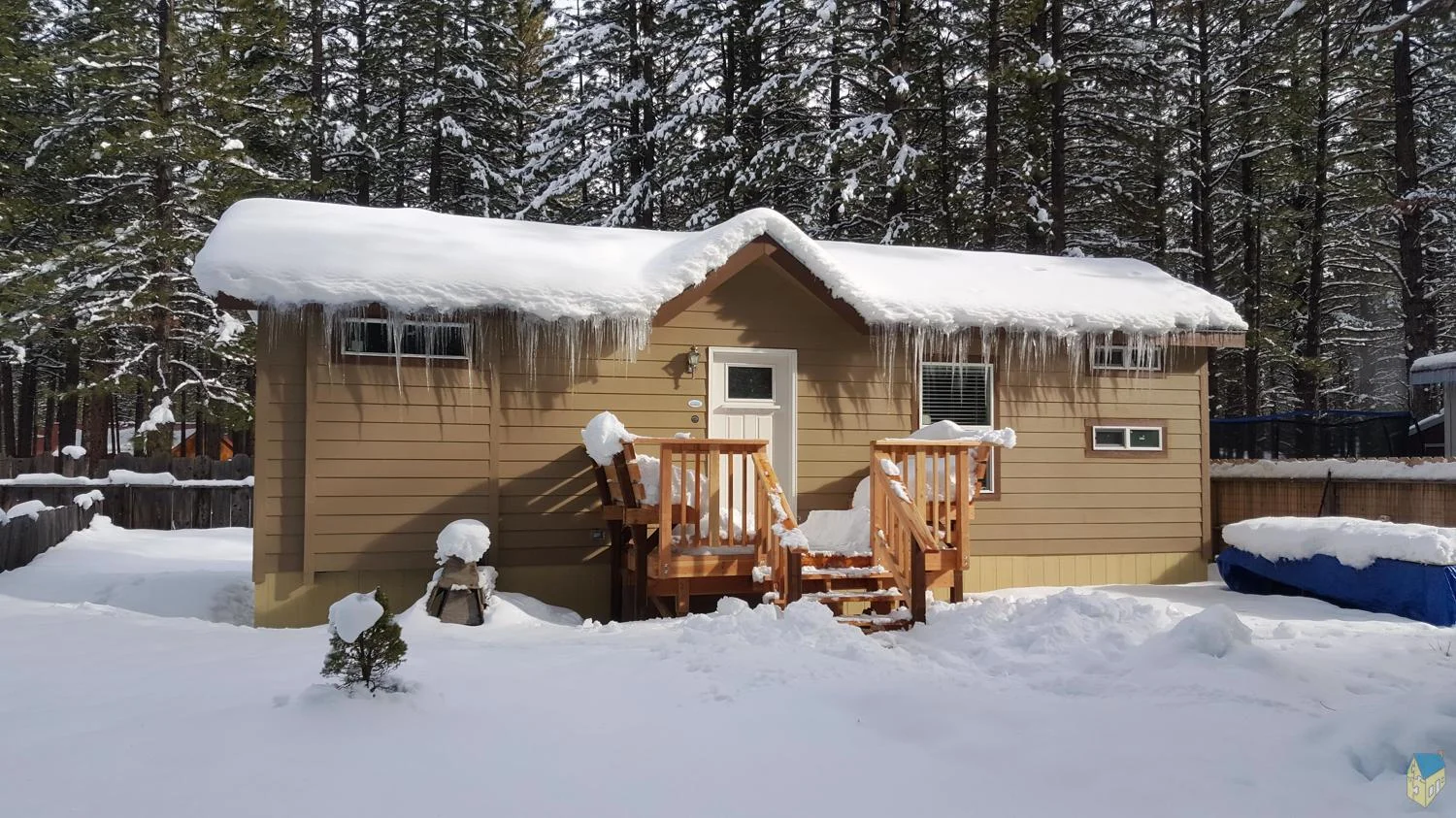
Park models occupy a unique space in the housing world. Under California law, a park model is technically a recreational vehicle. To maintain this classification, the unit must be under 400 square feet. These are often designed to look like tiny cottages or cabins, complete with lofts and front porches.
Since they are classified as RVs, they are built to the ANSI A119.5 standard. They are meant for seasonal use or as temporary housing in resorts and RV parks. Some California jurisdictions allow them to be used as Accessory Dwelling Units (ADUs), but this varies wildly by city and county. You cannot usually get a 30-year mortgage for a park model. Instead, you would look for an RV loan or a personal loan.
Reliable Home Solutions helps buyers find the right balance between these styles, especially when space is limited. Park models are excellent for guest houses or vacation rentals, but they may not be the right choice if you need a primary residence with significant storage space.
Comparing Costs and Foundations
Costs vary based on the level of customization and the region of California where you are building. Generally, park models have the lowest entry price because of their small size. Manufactured homes offer the lowest cost for a full-sized family residence. Modular homes are the most expensive factory-built option because they require more materials and a more complex foundation.
Foundations are a major differentiator. A manufactured home can sit on a pier-and-beam system or a concrete slab. A modular home must have a permanent foundation that meets local seismic requirements. In California, earthquake safety is a priority for all three types, but the specific engineering required for a modular home is much more intensive.
Manufactured: Steel chassis, pier-and-beam or slab, HUD Code.
Modular: Permanent perimeter foundation, California Building Code (CBC).
Park Model: Wheeled chassis, often remains mobile or semi-permanent, ANSI Code.
Zoning and Placement Hurdles
Zoning is often the biggest hurdle for California homebuyers. Some neighborhoods have restrictive covenants that forbid manufactured homes. Others might have minimum square footage requirements that rule out park models. Modular homes are usually allowed anywhere a site-built home is permitted because they meet the same building standards.
If you are planning to add a unit to your backyard as an ADU, you have more flexibility now than in previous years. Recent California state laws have made it easier to add small homes to residential lots. However, you still need to check if your local planning department accepts HUD-coded homes or if they require a modular unit. Park models are sometimes restricted to specific time limits or locations depending on the local interpretation of RV laws.
Making Your Decision
The right choice depends on your budget, your land, and your long-term goals. If you want a primary residence that builds equity like a traditional home, modular is the way to go. If you need an affordable, spacious home and you plan to live in a dedicated community or a rural area, a manufactured home is a strong contender. For those looking for a guest house, a backyard office, or a vacation tiny home, a park model provides a compact and stylish solution.
Take the time to visit local displays and walk through each type. The difference in ceiling height, wall thickness, and finish materials is easier to see in person. Understanding these technical distinctions ensures you invest in a home that meets your needs and complies with California's unique regulatory environment.